


Free Introductory Lesson
Tuba Lessons in Colorado Springs
The tuba is the foundation of the band. It’s the biggest, deepest brass instrument, and every ensemble depends on a good tuba player to hold the harmony and rhythm together. Good tuba players are always in demand, in school bands, orchestras, brass bands, and New Orleans–style brass groups. At Rocky Mountain Academy of Music, we offer private tuba lessons for students of all ages and skill levels at our studio on North Academy Blvd. Your first lesson is free, so you can meet your teacher and see how lessons work before you commit.

Who Tuba Lessons Are For
- Kids and teens in school band who want to keep up, move up a chair, or prepare for honor band and all-state auditions
- Marching band students playing sousaphone
- Beginners picking up their first brass instrument
- Baritone, euphonium, and trombone players moving down to tuba
- Students preparing for college music auditions
- Adults starting fresh, or getting back to the horn they played in school
What You’ll Learn
Lessons are built around your goals and the music you want to play. Most students work on:
- Breathing and air support. The tuba takes a lot of air. You’ll learn to breathe efficiently so you can play long phrases with a full, steady sound.
- Embouchure and tone. You’ll develop a big, warm, centered sound instead of a fuzzy or tight one.
- Rhythm and time. In most bands the tuba is the timekeeper, so playing steadily and in time is just as important as playing the right notes.
- Range and flexibility, with lip slurs and exercises for the low and high registers
- Reading music in bass clef, with scales and articulation
- Musicality. You’ll work on phrasing, dynamics, and listening so you blend with the band and support it.
- Audition preparation for honor band, all-state, and college auditions
Weekly lessons keep you progressing steadily, and a teacher can catch breathing and embouchure habits early, before they become hard to unlearn.
“Benito and his staff of instructors are wonderful to work with. Very professional, talented, and supportive of not only their students but of the music community in Colorado Springs. My teenager looks forward to his lesson every week!”
Tuba, Sousaphone, and Euphonium
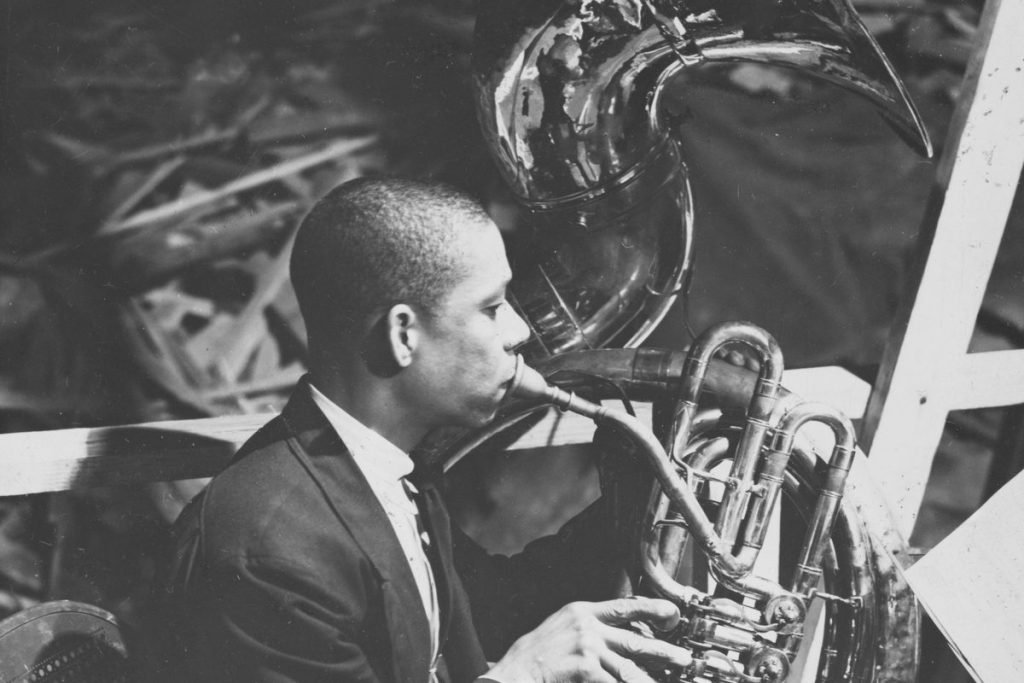
Concert tubas come in several keys and sizes. Most school students play a BB-flat tuba, while many professionals also play C, F, or E-flat tubas. The sousaphone is a tuba that wraps around your body for marching. It was designed for John Philip Sousa’s band in the 1890s. The euphonium is the tuba’s smaller, higher-pitched cousin. The fingerings carry over among all of them, so it’s easy to move between them.
A Little Tuba History
The tuba was patented in 1835 in Prussia, giving bands and orchestras a strong, agile bass voice. Composers like Wagner, Mussorgsky (in Ravel’s famous orchestration of Pictures at an Exhibition), Richard Strauss, Stravinsky, and Shostakovich wrote memorable tuba parts, and Ralph Vaughan Williams wrote one of the first major tuba concertos in 1954. The tuba is also a backbone of marching bands, drum corps, and brass bands. In early jazz and today’s New Orleans brass bands, the sousaphone plays funky, driving bass lines, and the Roots made the sousaphone part of hip-hop.
Play With Other Musicians
Tuba players are always needed. Our students can perform in student recitals, play duets and chamber music with other students, and join our jazz ensembles or rock band program on bass lines. We also teach trumpet, trombone, and baritone, and many brass students take piano lessons to strengthen their music theory and ear training.
Frequently Asked Questions
What age can my child start tuba lessons?
Most students start around age 10 to 12, often when they join school band. Many start on baritone or euphonium and move to tuba as they grow. Smaller 3/4-size tubas are also made for younger players. Adults are welcome at any age.
Do I need my own tuba?
Tubas are large and expensive, so many schools loan them to band students. A rental is another option. Ask us at your free lesson if you’d like recommendations.
Isn’t the tuba just “oom-pah” notes?
Not at all! The tuba has a rich solo repertoire, important orchestral parts, and some of the funkiest bass lines in brass band music. And because it holds the band together, a strong tuba player makes everyone sound better.
Is the tuba hard to learn?
It’s very approachable. Beginners often get a sound right away, and there are only three or four valves to learn. The biggest challenge is building air support, and lessons help with that from day one.
Schedule Your Free Tuba Lesson
Ready to get started? Call us at 719-722-0248 or send us a message to book your free introductory tuba lesson.
Rocky Mountain Academy of Music · 5426 North Academy Blvd, Ste 101 · Colorado Springs, CO 80918